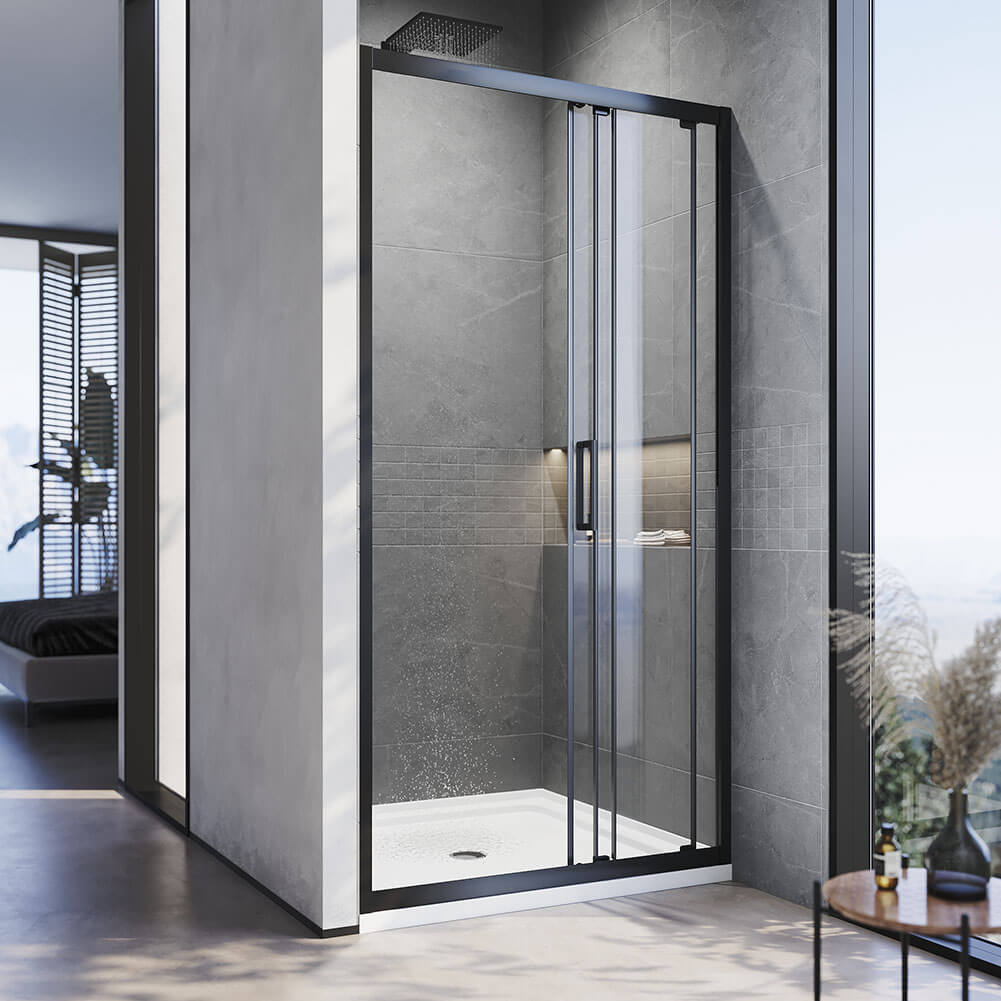

Choosing the right glass thickness for a corner shower screen can be surprisingly confusing. Walk into any Australian bathroom showroom, and you’ll see displays labelled 6mm, 8mm, and 10mm glass – but what do those numbers actually mean for your daily shower?
The truth is, glass thickness affects nearly everything: the look, feel, durability, and safety of your shower screen. A thin panel might save you money upfront, but it could flex, vibrate, or feel flimsy. A thicker panel adds luxury and rock‑solid stability, but it costs more and requires stronger hardware.
In this guide, we compare 6mm vs 8mm vs 10mm glass specifically for a corner shower screen, helping you understand what to look for when comparing products. We’ll follow Australian safety standards, explain real‑world trade‑offs, and answer the most common questions homeowners ask.

Australian Safety Standards: The Non‑Negotiable Starting Point
Before discussing thickness, you need to know what’s legal – and safe – in Australia.
All shower screens sold and installed in Australia must comply with AS/NZS 2208 (Safety glazing materials in buildings) and the Building Code of Australia (BCA). This requires the glass to be Grade A safety glass – either toughened (tempered) or laminated.
Toughened glass is heat‑treated so that if it breaks, it shatters into small, relatively harmless cubes rather than sharp daggers. Laminated glass uses a plastic interlayer that holds broken pieces together.
For framed shower screens, the BCA allows glass as thin as 4mm. For partly framed or frameless screens, the minimum is 6mm. However, industry best practice – and most Australian glaziers – will tell you that a true frameless corner shower screen needs 10mm glass. Why? Because a frameless screen has no metal frame to support the glass. The glass itself must be rigid enough to carry its own weight and withstand daily opening, closing, and accidental bumps.
So while 6mm is legal in certain configurations, it’s rarely the right choice for a modern, frameless corner shower.

6mm Glass Thickness: Budget‑Friendly Framed Shower Screens
Where 6mm Glass is Typically Used
6mm glass is the standard for framed and semi‑frameless shower screens. You’ll find it in many builder‑grade bathrooms, budget renovations, and smaller enclosures where an aluminium frame or U‑channel provides most of the structural support.
Look & Feel of 6mm Shower Glass
6mm glass feels noticeably lighter. When you tap it, it has a higher‑pitched ring, and on larger panels (over 900mm wide) you may see or feel a slight flex when you close the door. This “wobble” can make the screen feel less premium, especially in a frameless‑style design that relies on the glass to be stiff.
In a small bathroom or a wet area with limited traffic, 6mm can look perfectly fine. But if you want a solid, high‑end impression, 6mm rarely delivers.
Durability & Safety Considerations for 6mm Glass
6mm toughened glass meets the minimum safety standard – it will break safely. However, because it flexes more, the hinges and wall mounts experience repeated micro‑movements. Over years of daily use, that can lead to loose screws, misaligned doors, or even water leakage around seals.
For a family bathroom used three times a day, 6mm is the least durable option. It is also more likely to chip at the edges during installation or cleaning if hit hard.
Our verdict: Acceptable only for framed screens in low‑use or rental properties. Avoid for true frameless corner showers.

8mm Glass Thickness: The Most Popular Choice for Australian Homes
Why 8mm Strikes the Perfect Balance
8mm glass is the sweet spot for most Australian homeowners. It is the most commonly sold thickness for residential shower screens because it offers a good balance of strength, weight, and cost. It’s thick enough to feel sturdy, but not so heavy that it demands reinforced walls or an astronomical budget.
Look & Feel of 8mm Shower Glass
An 8mm screen feels solid and substantial. The door closes with a satisfying low thud rather than a tinny clink. On a panel up to 1200mm wide, flex is minimal to non‑existent. This thickness creates a premium impression without the luxury price tag of 10mm.
Visually, the edge of 8mm glass is noticeably thicker than 6mm, which many people find more aesthetically pleasing, especially in semi‑frameless or minimal‑frame designs.
Durability & Safety Considerations for 8mm Glass
8mm is very durable for residential use. It handles daily family life, accidental bumps from shampoo bottles, and the constant vibration of a shower door without loosening hardware. In fact, many Australian glaziers recommend 8mm for semi‑frameless and even some frameless corner screens – provided the panel size isn’t too large.
For noise reduction, 8mm performs well. The extra mass dampens sound better than 6mm, so you won’t hear every drop of water hitting the tray.
Our verdict: The best all‑round choice for most Australian bathrooms. Works beautifully for semi‑frameless and smaller frameless corner shower screens.

10mm Glass Thickness: The Premium Choice for Frameless Shower Screens
The Industry Standard for True Frameless Showers
If you want a true frameless corner shower screen – meaning absolutely no metal frame or supporting channels – then 10mm glass is the industry‑recommended minimum in Australia. Hotels, luxury homes, and high‑end renovations almost always use 10mm or even 12mm glass.
Look & Feel of 10mm Shower Glass
10mm glass feels heavy, luxurious, and utterly rigid. When you close the door, you get a deep, satisfying “thud.” There is zero flex even on very large panels (1500mm wide or more). The thick, polished edge catches the light and adds a sense of permanence and quality.
This thickness transforms a simple bathroom into a spa‑like retreat. It’s also the best choice for walk‑in showers with a single fixed panel – because there’s no door to provide extra support, the glass must be extremely stiff.
Durability & Safety Considerations for 10mm Glass
10mm is the most durable and safest of the three thicknesses. It has the highest impact resistance and is less likely to chip or scratch during normal use. However, its extra weight (about 25 kg per square metre) places higher demands on hinges, wall fixings, and the wall itself.
A 10mm glass door can weigh 40‑50 kg. If your wall is only plasterboard with no timber blocking or reinforced studs, you risk the door sagging or the wall flexing over time. Professional installation is essential – not optional.
Our verdict: The gold standard for true frameless corner shower screens. Worth the extra cost if you want the best look, feel, and longevity.
6mm vs 8mm vs 10mm Glass: Comparison Table
| Feature | 6mm Glass | 8mm Glass | 10mm Glass |
|---|---|---|---|
| Typical Use | Framed / Semi‑frameless | Semi‑frameless / light frameless | True frameless |
| Durability | Moderate (low‑use) | High (family‑friendly) | Very high (commercial / luxury) |
| Weight (kg/m²) | ~15 | ~20 | ~25 |
| Safety | Meets AS/NZS 2208 | High | Highest |
| Noise Reduction | Low | Medium | High |
| Cost (supply only) | $300‑$500 | $400‑$700 | $600‑$1,200+ |
| Flex on large panels | Noticeable | Minimal | None |
| Best for panel width | Up to 900mm | Up to 1200mm | Over 1200mm |

How Shower Screen Design Affects Thickness Choice
Many homeowners mistakenly believe that glass thickness alone determines quality. In reality, the design of the shower screen – specifically whether it is framed, semi‑frameless, or true frameless – often dictates the minimum thickness you need. The same 8mm glass can feel rock‑solid in a semi‑frameless configuration but dangerously flimsy in a true frameless setup. Understanding this relationship is key to making the right choice for your corner shower.
Framed Shower Screens: The Frame Does the Heavy Lifting
In a fully framed shower screen, every edge of every glass panel is encased in an aluminium or stainless steel frame. The frame itself provides all the structural support – it prevents twisting, absorbs vibrations, and transfers loads to the walls and floor. The glass inside is essentially a filler panel.
Because the frame bears the weight, the glass can be much thinner. Most Australian framed screens use 4mm or 5mm glass, with 6mm being the common maximum. You will almost never see 8mm or 10mm glass in a fully framed product – it would be overkill and unnecessarily heavy.
Key implications:
-
6mm framed screens are safe, cheap, and widely available.
-
The frame collects soap scum and mould along its seals, making cleaning harder.
-
Framed designs look less modern and can feel “budget” in a high‑end bathroom.
-
Thicker glass (8‑10mm) cannot simply be dropped into a framed system – the frame profiles are sized for thinner material.
When to choose framed: Tight budget, low‑use bathroom, or if you prefer the look of visible framing (e.g., heritage styles).
Semi‑Frameless Shower Screens: The Middle Ground
Semi‑frameless shower screen designs strip away most of the frame, leaving only minimal structural elements – typically a vertical wall profile at each end, a bottom channel, or a top rail. The glass is still supported, but much of its surface is exposed.
This design is a compromise. It allows a cleaner, more open look while still tolerating 6mm or 8mm glass – often 8mm for the fixed panel and 6mm for a hinged door. The existing framing provides enough stiffness that the glass doesn’t need to be 10mm thick.
In Australia, semi‑frameless screens are the most popular choice for renovations because they offer:
-
Better aesthetics than fully framed.
-
Lower cost than true frameless (no need for 10mm glass or heavy‑duty hardware).
-
Forgiveness for slightly out‑of‑plumb walls – the remaining channels hide gaps.
However, the visible metal profiles (often 25‑50mm wide) still interrupt the seamless look. And if the screen uses 6mm glass, you may still feel some flex, especially on a large door.
When to choose semi‑frameless: You want a modern look but have a moderate budget, or your walls are not perfectly straight, or you prefer 8mm glass for its balance of strength and cost.
True Frameless Shower Screens: Glass as Structure
A true frameless corner shower screen has no metal frame anywhere. Fixed panels are held by clamps or U‑channels that grip the glass edge, but those channels are not structural – they simply seal the joint. Hinges are mounted directly to the glass and to the wall. The glass must be fully self‑supporting.
This design demands the thickest glass because:
-
No frame resists flex – the glass alone must remain rigid when pushed.
-
All load goes through the glass – the weight of the door, the force of closing, and incidental bumps are all absorbed by the glass edges and hinges.
-
Larger panels are common – frameless designs emphasise big, uninterrupted glass surfaces, which increases leverage and flex.
For true frameless, Australian industry best practice – and most glaziers – requires a minimum of 10mm glass. Some very large panels (over 1500mm wide or ceiling‑height) use 12mm. 8mm glass in a true frameless configuration is considered unsafe and will visibly wobble, eventually loosening hardware or causing leaks.
What about 8mm “frameless” products? Be cautious. Some manufacturers advertise “frameless” but actually include a top or bottom rail – that’s semi‑frameless. Others claim 8mm is fine for small panels (e.g., 700mm wide). While technically possible, it’s below the recommended standard and you may regret the lack of rigidity.
When to choose true frameless: You want the ultimate in modern design, a luxurious feel, and are prepared to pay for 10mm glass, premium hardware, and professional installation. Also ensure your walls are reinforced to take the weight.
Practical Examples: Matching Design to Thickness
| Shower Design | Typical Glass Thickness | Notes |
|---|---|---|
| Fully framed corner screen | 4‑6mm | Frame does all structural work. 6mm feels fine. |
| Semi‑frameless with bottom channel & wall profiles | 6‑8mm | 8mm recommended for a solid feel. |
| Semi‑frameless with minimal top rail only | 8mm | More exposed glass; 6mm would flex too much. |
| True frameless – small fixed panel (under 800mm) | 8‑10mm | 8mm possible but 10mm safer. |
| True frameless – door + fixed panel, any width over 900mm | 10mm minimum | Industry standard. Never use 6mm. |
| True frameless – large walk‑in panel (1500mm+) | 10‑12mm | 12mm for extra rigidity. |
The Hidden Factor: Hinge and Clamp Placement
Design also affects where hinges attach. In a semi‑frameless screen, hinges often bolt to the wall profile – a very strong connection. In a true frameless screen, hinges clamp directly to the glass edge. Thicker glass (10mm) provides more surface area for the hinge clamp, reducing the risk of cracking or slipping.
Similarly, glass‑to‑glass hinges (connecting two frameless panels) work much better with 10mm because the clamping force is distributed over a larger area.
Final Advice on Design vs. Thickness
Never choose a glass thickness without first deciding on the shower screen design you want. Work backwards:
-
Decide if you want a visible frame (framed), minimal frame (semi‑frameless), or no frame (true frameless).
-
Based on that design, identify the minimum recommended thickness from the table above.
-
If your budget or wall strength is limited, do not force a true frameless design with 8mm glass – instead, choose a high‑quality semi‑frameless screen with 8mm glass, which will feel better and last longer than a poorly executed “frameless” 8mm screen.
In short: design dictates thickness, not the other way around. A well‑designed semi‑frameless 8mm screen will outperform a poorly designed true frameless 8mm screen every time. When in doubt, consult a licensed Australian glazier who can assess your space and recommend the appropriate combination.
How Corner Shower Screen Panel Size Affects Glass Thickness Choice
The size of each glass panel matters as much as the thickness. A small 700mm wide panel made of 8mm glass will feel very rigid. A 1500mm wide panel made of the same 8mm glass will bow noticeably when you push on the middle.
General rule of thumb:
-
Panel width up to 900mm → 6mm acceptable (framed only), 8mm better.
-
Panel width 900‑1200mm → 8mm recommended, 10mm for frameless.
-
Panel width over 1200mm → 10mm required for frameless.
Also consider height. Ceiling‑height panels (2100‑2400mm) need thicker glass than standard 1800mm panels because leverage increases.
Frequently Asked Questions (FAQ)
Can a shower screen be 6mm glass?
Yes, but only in framed or semi‑frameless designs. 6mm is too thin for a true frameless corner shower screen – it will flex and may eventually cause hardware failure. Always check the manufacturer’s specifications.
Is 8mm glass strong enough for a corner shower screen?
For most Australian homes, yes. 8mm glass is strong enough for semi‑frameless and even some frameless designs, provided the panel width is under 1200mm. It offers an excellent balance of strength, cost, and feel.
Are 10mm glass shower screens worth the extra money?
For a true frameless look and a luxury feel – absolutely. The rigidity, premium aesthetic, and long‑term durability justify the higher price, especially in master bathrooms or high‑use family homes. If budget is tight, 8mm is still very good.
Which glass thickness is safest for a corner shower screen?
10mm is the safest due to its rigidity and impact resistance. However, all thicknesses must be Grade A toughened or laminated safety glass per AS/NZS 2208, so even 6mm breaks safely. The real safety advantage of 10mm is that it is less likely to be flexed into contact with hard surfaces.
Final Thoughts: Which Thickness Should You Choose?
-
Choose 6mm only if you have a framed corner shower screen, a very tight budget, or a low‑use bathroom (e.g., guest ensuite).
-
Choose 8mm if you want the best value – it works for semi‑frameless and many frameless designs, feels solid, and won’t break the bank.
-
Choose 10mm if you are installing a true frameless corner shower screen and you value a premium, luxurious feel with maximum durability and safety.
Measure your panel size, check your wall strength, and always use a licensed glazier who follows Australian standards. With the right thickness, your corner shower screen will look beautiful, feel rock‑solid, and stay safe for decades.
Need more inspiration or expert guidance?
Choosing between 6mm, 8mm, and 10mm glass can still feel overwhelming – especially when you factor in different frame styles, hardware options, and bathroom layouts. That’s why Elegant Showers offers a wide range of corner shower screen solutions tailored to Australian homes.
👉 Visit https://www.elegantshowers.com.au today to explore real‑world examples of 6mm, 8mm, and 10mm glass shower screens. You’ll find detailed product comparisons, design ideas, and professional advice to help you make the right choice for your budget and bathroom style.
Whether you need a budget‑friendly framed 6mm screen, a versatile semi‑frameless 8mm design, or a luxury 10mm frameless shower, Elegant Showers has the solution. Browse their collection online or contact their team for a personalised quote.