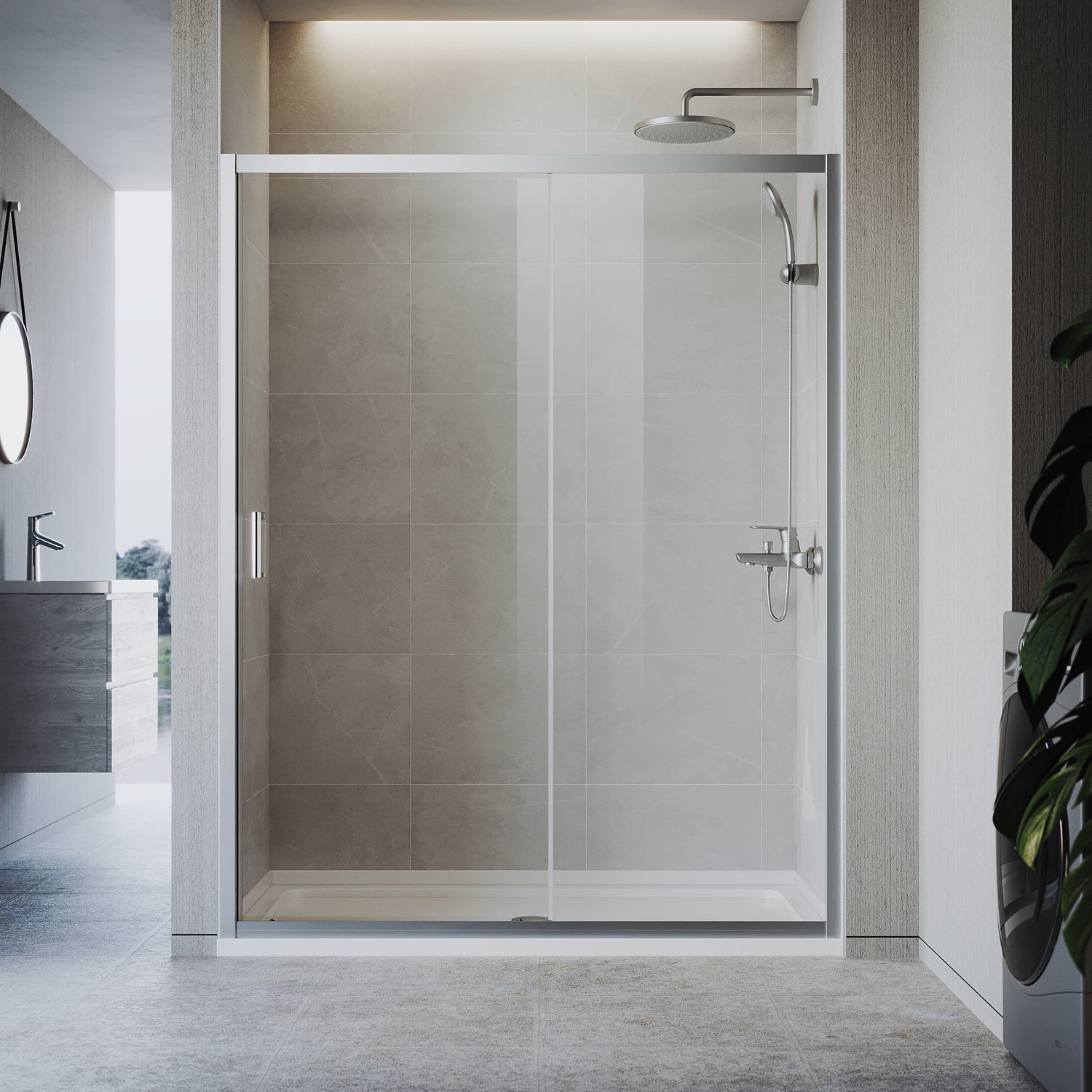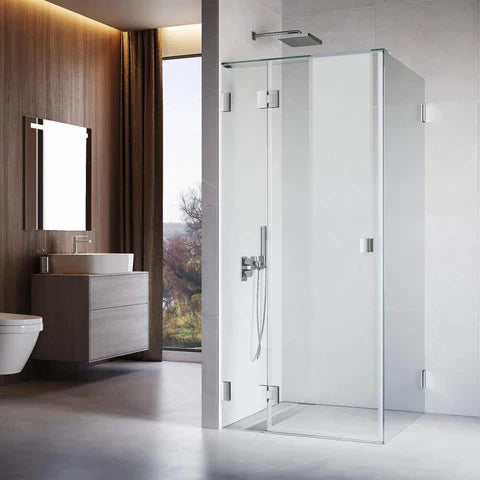

When renovating or building a bathroom in Australia, few decisions impact both aesthetics and functionality as much as your choice of a corner shower screen. Order the wrong size, and you face leaks, costly returns, or a complete installation failure. The problem is that many Australian homeowners, especially those with older properties, assume their walls are perfectly square and plumb. They are almost never.
This complete guide walks you through every standard corner shower screen size used in Australian bathrooms, explains exactly how to measure your space step‑by‑step, and warns you about the single biggest hidden trap: out‑of‑plumb walls. By the end, you will know precisely which dimensions to order and how to avoid common, expensive mistakes.

What are Standard Corner Shower Screen Sizes in Australian Bathrooms
A corner shower screen is any glass enclosure designed to sit in a 90‑degree corner of your bathroom. In Australia, these screens are not “one size fits all.” Instead, they come in several standard configurations: square (equal return panels), rectangular (one panel longer), neo‑angle (angled front for a walk‑in look), and quadrant (curved glass).
What many DIYers don’t realise is that a standard corner shower size is always expressed as two numbers: the front panel width (the entry side) and the return panel depth (the side that meets the wall). For example, a 900×900 mm square corner shower has both return panels measuring 900 mm from the corner. A 1000×800 mm rectangular unit has one side 1000 mm and the other 800 mm.
Knowing these standard configurations helps you match your existing bathroom layout or choose a pre‑manufactured screen without needing a costly custom order.
Complete Breakdown of Common Corner Shower Screen Dimensions
In Australia, the vast majority of corner shower screens adhere to standardised dimensions that fit most new and renovated bathrooms. The most frequently sold sizes are based on multiples of 100 mm, with 900 mm and 1000 mm being the absolute most common.
Height Dimensions
Australian shower screen height typically ranges from 1900 mm to 2100 mm, with 2000 mm (2 metres) being the industry standard. This height works with standard ceiling heights (2400 mm) and leaves room for overhead rain showerheads or fixed pipes.
Width (Return Panel) Dimensions
-
900 mm × 900 mm – The most popular square corner shower size in Australian apartments and smaller bathrooms.
-
1000 mm × 1000 mm – Preferred for ensuite bathrooms and family homes.
-
900 mm × 1000 mm – A rectangular option that gives extra elbow room on one side.
-
1200 mm × 900 mm – For larger wet areas or accessible showers.
Quick‑Reference Table of Standard Corner Shower Screen Sizes
| Configuration | Panel A (front) | Panel B (return) | Typical Use |
|---|---|---|---|
| Square | 900 mm | 900 mm | Compact bathrooms |
| Square | 1000 mm | 1000 mm | Standard ensuites |
| Rectangular | 1000 mm | 800 mm | Narrow wet areas |
| Neo‑angle | 800 mm | 800 mm | Walk‑in corner |
| Quadrant | 900 mm radius | 900 mm radius | Curved, space‑saving |
Always check with your supplier, as some brands offer “plus sizes” (e.g., 1100×1100 mm) but these are less common and may require custom fabrication.
Essential Tools and Preparations for Measuring a Corner Shower Enclosure
Before you touch a tape measure, gather the right tools. Inaccurate measurements almost always come from using the wrong equipment or failing to prepare the area.
-
Metal tape measure (5 m or longer) – Fibreglass tapes stretch and give false readings. Use a rigid metal blade.
-
Spirit level (at least 600 mm long) – Essential to detect out‑of‑plumb walls.
-
Notebook and pencil – Do not trust your memory; write each measurement twice.
-
Step ladder – To measure height safely and reach the top of wall channels.
-
Phone/camera – Take photos of the corner with measurements written on masking tape.
Golden rule: Always measure in millimetres (mm). Never use centimetres or inches. Australian glass suppliers work exclusively in mm, and a single conversion error will ruin your order.
If you are unsure at any stage, call a professional shower screen installer. A service call is far cheaper than a mis‑ordered screen.

How to Measure for a Corner Shower Screen: A Step‑by‑Step Guide
This is the most important section. Follow each step exactly, and do not skip the three‑point measurement.
Step 1: Identify the Installation Area
Confirm that your shower will sit in a true 90° corner. Look for protruding pipes, floor wastes, or vanity overhangs that could interfere. Decide whether you need a corner entry (door facing the room) or a quadrant (curved) screen.
Step 2: Measure the Width (Front and Return Panels)
From the corner point, measure along each wall to the desired end of the shower screen. For a square 900×900 mm unit, you would measure 900 mm out from the corner on both walls. Mark these points with a pencil.
Step 3: Master the “Three‑Point Measurement”
This is the critical step that accounts for crooked walls. At each wall (left and right), measure the width at three different heights:
-
100 mm above the floor
-
Halfway up the wall (approx. 1000 mm)
-
100 mm below the ceiling (or at the intended screen height)
Write down all six measurements. If any of those measurements differ by more than 5 mm, your wall is out‑of‑plumb (see next section).
Step 4: Measure the Height Correctly
Measure from the finished floor or the top of your shower base up to the desired screen height. For a standard 2000 mm screen, measure 2000 mm up from the floor. Check this height at both ends of the opening. If the floor is uneven, use the lowest height measurement as your reference.
Step 5: Account for Wall Channels and Glass Thickness
Most corner shower screens install into aluminium wall channels (U‑channels) or brackets. These add 5‑10 mm to the total width. Also factor in glass thickness: standard screens use 6 mm toughened glass, while premium frameless screens often use 8 mm or 10 mm glass.
Example calculation:
You want a 900 mm return panel. The glass itself is 900 mm, plus two 6 mm wall channels = 912 mm total width required. Always ask your supplier for their specific allowance.
Step 6: Double‑Check and Record All Dimensions
Write the final dimensions as: Height × Return Panel A × Return Panel B (e.g., 2000×900×900 mm). Wait 24 hours, then measure again. If the numbers match, you are ready to order.
Common Installation Problems and How to Solve Them
Even with perfect measurements, challenges arise. Here are three frequent issues and their fixes.
Problem 1: Gaps Between the Screen and the Wall
Cause: Severely out‑of‑plumb wall or an uneven shower base.
Solution: Use a high‑quality sanitary silicone sealant (clear or white) to fill gaps up to 8 mm. For larger gaps, apply adhesive foam or rubber compression seals before caulking. If the gap exceeds 15 mm, you will need a custom‑shaped glass panel.
Problem 2: Unlevel Floor or Shower Base
Cause: Settling of the house or poor tiling.
Solution: Place plastic packers or shims under the bottom rail of the screen. Level the rail first, then tighten brackets, and finally silicone over the packers to conceal them.
Problem 3: Swing Door Clearance
Cause: The shower screen door swings into a vanity, toilet, or heated towel rail.
Solution: Before ordering, measure the clearance arc. For a 900 mm wide door, you need at least 900 mm of clear space in front of the screen. Consider a sliding or bi‑fold corner screen if space is tight.
Corner Shower Screen Materials and Australian Safety Standards
Every legally installed shower screen in Australia must comply with AS/NZS 2208: Safety glazing materials in buildings and AS 1288: Glass in buildings – Selection and installation. Toughened (tempered) safety glass is mandatory; annealed glass is illegal for shower screens.
-
6 mm toughened glass – Standard for most framed screens.
-
8‑10 mm toughened glass – Used for frameless screens to reduce flex and vibration.
-
12 mm – Rare, only for very large custom panels.
When buying a corner shower screen, always verify that the product carries an Australian Standards sticker. Imported non‑compliant screens can shatter dangerously and will void your home insurance.
Frequently Asked Questions (FAQs) About Corner Shower Screens
What is the most common corner shower screen size in Australia?
The most common sizes are 900 mm × 900 mm and 1000 mm × 1000 mm for square corner units, with a standard height of 2000 mm.
Are frameless corner shower screens better than framed ones?
Frameless screens offer a sleek, modern look and are easier to clean. Framed screens are generally more affordable and their frames can better hide minor wall imperfections and out‑of‑plumb conditions.
What does “return panel” mean for a corner shower screen?
The return panel (or return glass) is the side panel of the shower enclosure – the part that returns to the wall from the corner. Standard return panel sizes range from 800 mm to 1000 mm.
How much gap should I leave between a shower screen and the wall?
A gap of approximately 5 mm is typical. This allows for minor adjustments during installation and is then filled with a bead of silicone sealant.
Can I install a corner shower screen myself if my walls are out of plumb?
Yes, but you must account for the out‑of‑plumb when measuring. Many screens feature adjustable wall channels that can accommodate up to 10‑12 mm of variation. If the deviation is larger, consult a professional.