
If you’ve ever squeezed past a shower screen just to reach the toilet, you know the struggle of a compact Australian bathroom. Whether you’re in a 1970s Melbourne flat or a modern Sydney apartment, bathrooms under six square metres demand clever thinking. The good news? Small bathrooms spark the best design solutions. By rethinking three core elements – your corner shower layout, tiling strategy, and layered lighting – you can transform a cramped space into a spa-like retreat.
This guide delivers specific, actionable tips drawn from Australia’s top renovation insights. You’ll learn how a corner shower frees up floor space, why large-format tiles minimise grout lines for a seamless look, how a recessed shower niche eliminates bulky caddies, and why adding a recessed light above your shower creates that coveted spa atmosphere. Let’s turn your small bathroom into a big-impact showpiece.

Why a Corner Shower is the Ultimate Space-Saving Solution for Small Bathrooms
A corner shower tucks the largest feature of your bathroom neatly into a 90‑degree angle. Instead of dominating the centre of the room, the shower sits out of the traffic flow. This simple shift liberates valuable floor area, improves circulation, and lets you reclaim space for a larger vanity, a slim washer, or simply breathing room.
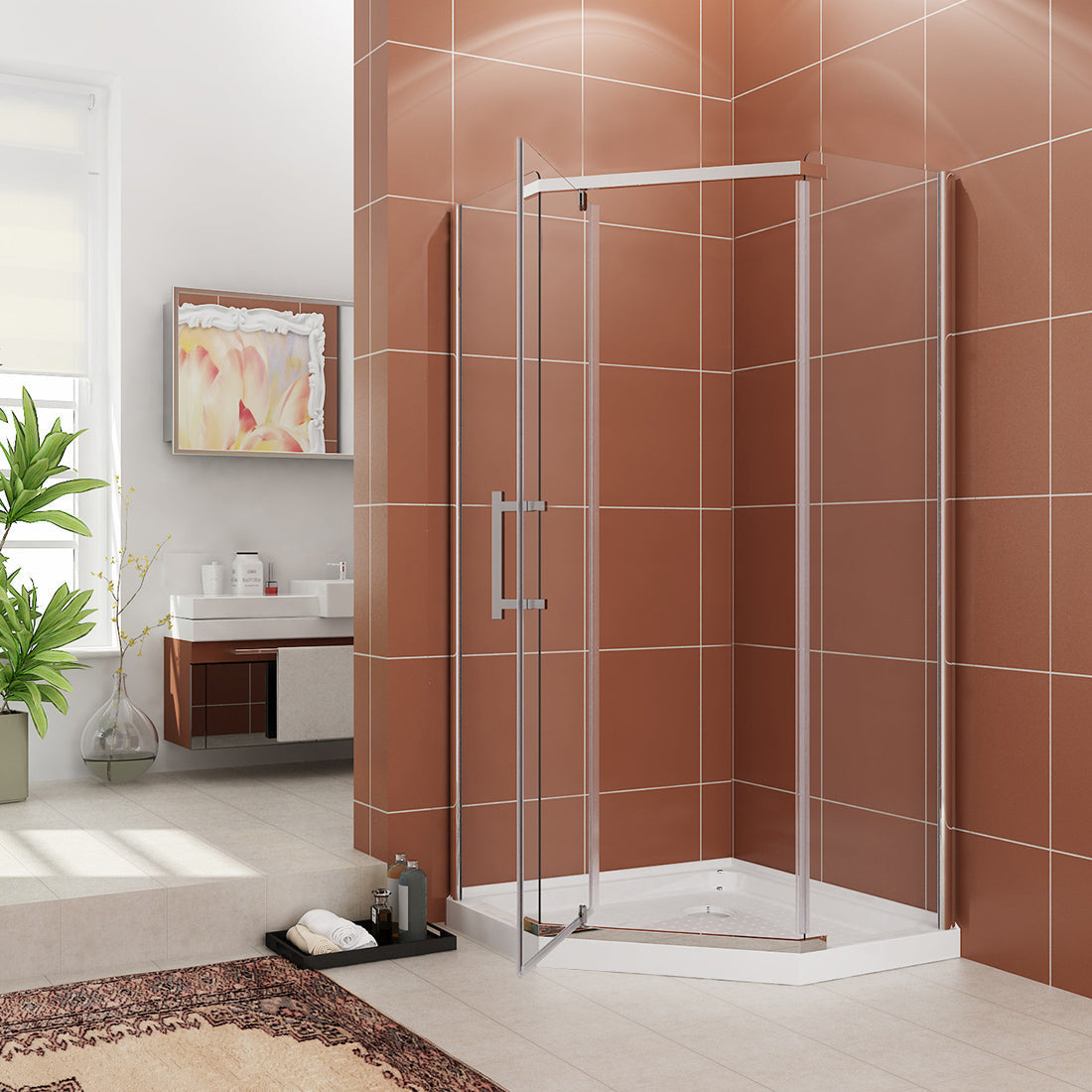
The magic lies in the enclosure style. For very tight ensuites, a neo‑angle (diamond‑shaped) shower uses five glass panels with flat front and angled side returns. It feels more spacious inside than a square enclosure of the same footprint. If you prefer softer lines, a quadrant (curved) shower smooths out sharp corners and makes moving around the bathroom easier. For the ultimate minimalist look, choose a frameless glass corner shower – uninterrupted sightlines allow the glass to almost disappear, letting the room breathe.
Neo-Angle vs. Quadrant vs. Frameless Glass Corner Showers
| Type | Best for | Visual Impact |
|---|---|---|
| Neo-angle | Ultra‑tight spaces, ensuites | Modern, angular |
| Quadrant | Softening corners, family bathrooms | Gentle, flowing |
| Frameless glass | High‑end, open feel | Seamless, expansive |
Small Corner Shower Minimum Dimensions for Australian Bathrooms
What’s the smallest workable size? Aim for 900 × 900 mm. In a very tight ensuite, you can drop to 850 × 900 mm, but anything smaller starts to feel cramped. Crucially, you must maintain a clear walkway of 700–800 mm in front of the shower. Always check compliance with AS 3740 waterproofing and NCC 2022 Livable Housing provisions – your sparky and waterproofer will thank you.

Corner Shower Tiling Strategies: Creating a Seamless, Expansive Look
Once your corner shower layout is locked in, tiling becomes your secret weapon for visual expansion. The wrong tile can fragment a small space; the right tile makes it feel twice as large. Three core strategies deliver that seamless, high‑end look:
-
Large‑format tiles – fewer grout lines, calmer aesthetic.
-
Vertical orientation – draws the eye up, raises perceived ceiling height.
-
Continuous flooring – run the same tile from bathroom floor into the shower.
Large-Format Tiles: Minimising Grout Lines for a Seamless Corner Shower
Here’s the tile rule for small bathrooms: bigger is better. 600×600 mm or 600×1200 mm rectified porcelain tiles create a near‑seamless, monolithic appearance. Fewer grout joints mean up to 60% less grout surface area – that’s less mould, less scrubbing, and a calmer visual field.
Use 1.5–3 mm grout joints and choose a grout colour that matches your tile. Epoxy grout costs more but resists staining and mildew far better than cementitious grout. Just avoid going too large (e.g., 1200×2400 mm) in a tiny corner shower – cutting and handling becomes impractical.
Vertical Tile Orientation to Elongate Small Bathroom Walls
Running tiles vertically is an instant optical lift. Instead of standard horizontal subway stacks, choose 300×900 mm wall tiles laid vertically, or stack subway tiles in a vertical column. This pattern draws the eye upward, making low ceilings feel higher. If your shower is narrow but tall, vertical tiling emphasises that height advantage beautifully.
Continuous Floor-to-Shower Tiling and Light Colour Palettes
For the ultimate seamless look, carry the same tile from your bathroom entry all the way into the corner shower – just ensure correct falls toward a linear drain. No threshold, no colour change, no interruption. The eye reads one continuous surface, and the room feels larger.
Pair this with a light colour palette: soft whites, warm greys, stone‑look porcelain, or sandy beiges. Light tones reflect more illumination, especially when paired with warm LED lighting. Dark tiles absorb light and can make a small corner shower feel like a cave. Save dramatic charcoal for a powder room; keep your shower bright and airy.

Corner Shower Storage: Integrating Recessed Niches to Eliminate Bulky Caddies
Let’s talk about the clutter that ruins a clean aesthetic: corner caddies, over‑door organisers, and suction shelves. They trap soap scum, they wobble, and they scream “small bathroom compromise.” The elegant solution is a recessed shower niche – a cavity built between wall studs that uses zero floor space and holds everything from shampoo bottles to face wash.
Niches are framed during the rough‑in stage, before waterproofing and tiling. They can be positioned exactly where you need them: opposite the showerhead or on a side wall, at elbow height (roughly 48–60 inches above the finished floor). Avoid placing the niche directly under the showerhead’s spray pattern – you want contents to stay dry between uses.
Recessed Shower Niche Placement, Sizing, and Depth Guidelines
Standard niche dimensions that work for most Australian bathrooms:
-
Width: 300–1000 mm (wider niches can hold a family’s worth of bottles).
-
Height: 300–400 mm (enough for standard shampoo and body wash bottles).
-
Depth: 100–150 mm (deeper than 150 mm wastes wall cavity; shallower than 100 mm won’t fit large bottles).
For a corner shower, a single 600×350 mm niche usually suffices. If you have a larger family, consider two niches stacked vertically – a double recess doubles storage without using extra wall width.
Shower Niche Design Variations: Double, Corner, Vertical, and LED-Lit Niches
You’re not limited to a basic rectangle. Explore these niche design ideas:
-
Double recess (stacked): Two niches, one above the other – perfect for families with different bottle heights.
-
Corner recess: Built into the inside corner of the shower where two walls meet. Great for very small showers where side walls are narrow.
-
Vertical recess: Tall and narrow (e.g., 200×600 mm). Holds tall shampoo bottles and razors, ideal for skinny wall cavities.
-
LED‑lit niche: A waterproof IP67 LED strip inside the niche shelf adds a stunning spa glow and doubles as a nightlight.
-
Wide recess (full‑wall): Spans most of the shower wall – a bold design statement, but requires careful waterproofing and ample wall space.
Whichever you choose, ensure your waterproofing membrane (AS 3740 compliant) is properly sealed around the niche edges. A recessed niche is only as good as its waterproofing.

Corner Shower Lighting: Adding a Recessed Light Above the Shower for a Spa-Like Atmosphere
Lighting makes or breaks the spa experience. In a small corner shower, a single overhead light can cast harsh shadows. The secret is layered lighting with a dedicated moisture‑rated recessed downlight directly above the shower zone. Position it centrally over the shower footprint, angled slightly away from the showerhead if you prefer.
When you step into warm, dimmable light, the shower transforms from a utilitarian wash station into a relaxing retreat. Evening soaks (or quick wind‑downs) feel indulgent. Morning routines feel energising. It’s a small addition that delivers daily joy.
Dimmable Warm LED Recessed Lighting: Colour Temperature and Wet‑Rating Requirements
Before you buy any light fixture, check the specs:
-
IP rating: Minimum IP65 for the shower zone (above the shower head). For a niche interior, use IP67.
-
Dimmable: Yes – you need to be able to lower the light level for evenings.
-
Colour temperature: 2700–3000K (warm white). Cool white (4000K+) looks clinical and harsh. Warm light enhances tile colours – beige, stone, white, or grey all look richer.
-
Australian compliance: All electrical work must follow AS/NZS 3000. Use a licenced electrician.
Install the downlight on a separate dimmer switch from the main bathroom lights. This way, you can leave a soft glow in the shower while the vanity lights are off – perfect for late‑night visits.
Layered Lighting Strategies: Niche Lighting, Under‑Vanity Strips, and Mirror Lighting
A single recessed light is only the start. For true spa‑like atmosphere, build three layers:
-
Accent lighting: Waterproof LED strip inside your recessed niche. It highlights the products and creates a warm, floating shelf effect.
-
Ambient lighting: The recessed downlight above the shower (as above). Use a dim‑to‑warm LED that mimics natural sunset tones.
-
Task lighting: At the vanity, install backlit mirrors or wall‑mounted sconces at eye level. This eliminates shadows for shaving or makeup.
-
Toe‑kick lighting: Low‑profile recessed strips under a floating vanity – a soft nightlight that guides you without blinding you.
All three layers on separate dimmers allow you to switch between “morning bright” and “evening relaxation” instantly. The result? A corner shower that feels like a boutique hotel bathroom, not a cramped afterthought.
Pulling It All Together – Australian Small Bathroom Design Integration
A corner shower with beautiful tiling, a recessed niche, and layered lighting doesn’t come together by accident. Each element must be sequenced correctly during your renovation to avoid expensive rework, especially given Australian waterproofing and electrical standards. Here’s your step‑by‑step integration roadmap, written for anyone renovating a small bathroom in Melbourne, Sydney, Brisbane, or Perth.
Step 1: Finalise your floor plan before buying anything.
Measure your bathroom precisely. Mark the corner shower’s 900×900 mm footprint, then tape out the neo‑angle or quadrant enclosure on the floor. Walk around it. Can you open the door fully without hitting the vanity or toilet? Is there a clear 700–800 mm walkway? Adjust now – not after tiling. Remember that frameless glass swing doors need more clearance than sliding doors.
Step 2: Frame the walls with niches and lighting conduits in mind.
During the rough framing, instruct your carpenter to leave open cavities for recessed niches between studs. Standard stud spacing is 450 mm or 600 mm centre‑to‑centre; a 450‑mm niche fits perfectly in a 600‑mm stud bay after adding timber packers. At the same time, run electrical conduit from the switch location to the shower ceiling (for the IP65 downlight) and to the niche position (for a future LED strip). Even if you don’t install the strip immediately, pre‑wiring costs little now and saves a tiled‑wall headache later.
Step 3: Waterproof like your home depends on it – because it does.
AS 3740 is mandatory. Your waterproofer must apply a continuous membrane over all shower walls up to 1800 mm high (or to the ceiling in corner showers with steam or heavy rainfall heads). The niche requires special attention: the membrane must wrap into the recess with no gaps at internal corners. Insist on a 48‑hour flood test before tiling. In Australian apartments, strata may require evidence of this test.
Step 4: Tile with the final lighting in mind.
When you lay your large‑format rectified porcelain tiles, consider where the recessed downlight will sit. Avoid placing a grout line directly under the light – it can create an annoying shadow or highlight every imperfection. Also, if you’re running continuous flooring from bathroom to shower, establish your falls (minimum 1:100) before tiling the shower floor. A linear drain at the shower’s back wall works beautifully with large‑format tiles because you can slope a single plane rather than four.
Step 5: Install the niche and lighting in the correct order.
After tiling but before grouting, fit your pre‑fabricated niche shelf (or have your tiler cut and polish stone shelves). If you’re adding an LED strip, embed it into a shallow aluminium channel that sits flush with the tile surface. Use IP67 silicone‑filled strip and connect it to the pre‑run conduit. Test the light before grouting – it’s much easier to fix a wiring issue when you can still access the wall cavity.
Step 6: Final electrical fit‑off and enclosure installation.
Once tiling and grouting are fully cured, your electrician installs the IP65 dimmable recessed downlight above the corner shower. They’ll also connect the niche LED to its dimmer. Finally, the glazier fits your neo‑angle, quadrant, or frameless corner shower enclosure. Check that the door seals meet the finished floor and that no water can escape at the hinge points.
Design cohesion tip: Choose all visible finishes – tapware, shower head, niche trim, downlight bezel, and enclosure hardware – in the same family (e.g., matte black, brushed nickel, or chrome). Mixed metals in a small space can look busy, while a unified palette feels intentionally designed.
Potential pitfalls to avoid:
-
Installing the recessed light off‑centre so it casts shadows on your face.
-
Placing a niche on a wall that also contains a window or a structural stud.
-
Forgetting to order a frameless enclosure with a low profile threshold – some standard thresholds are 40 mm high and become a trip hazard.
-
Choosing a dark grout with light tiles – it emphasises every grout line, working against that seamless look.
Small Bathroom Renovation Budget Guide – Corner Shower Edition
Here are realistic Australian cost estimates (2026) for each component. Prices exclude GST and vary by city (Sydney and Melbourne typically 15–20% higher).
| Item | Low Range | High Range |
|---|---|---|
| Corner shower enclosure (neo‑angle/quadrant) | $800 | $2,200 |
| Frameless/semi‑frameless screen upgrade | $650 | $1,550 |
| Tiling labour (per sq m, excluding tiles) | $35 | $120 |
| Porcelain large‑format tiles (per sq m) | $40 | $150+ |
| Recessed niche installation (framing + waterproofing) | $250 | $800 |
| IP65 recessed downlight + electrician | $500 | $1,500 |
| Niche LED strip + fitting | $100 | $400 |
Total project ranges (full bathroom, 4–6 sq m):
-
Basic facelift (same layout, new tiles, niche, light) – 18,000
-
Mid‑range (new corner shower enclosure, semi‑frameless, better tiles) – 25,000
-
Full reconfigured layout (moving plumbing, frameless, premium lighting) – 28,000
Always get three quotes and check that trades are licensed and insured.
Frequently Asked Questions (FAQ) about Corner Showers
Are corner showers good for very small bathrooms?
Yes – corner showers reclaim central floor area and, when paired with glass enclosures and light tiles, make a small bathroom feel larger.
What is the most space‑efficient shower door type for a corner shower?
Sliding or bi‑fold shower doors are most efficient because they don’t require exterior swing clearance. For neo‑angle showers, pivot doors work well but need more forward space.
How do I prevent water from escaping a corner shower?
A quality threshold, correctly fitted door seals, and a floor slope of at least 1:100 toward the drain. Frameless installations require precise workmanship – pay extra for an experienced installer.
Can I install both a bathtub and a corner shower in the same small bathroom?
Yes, if the room is at least 5–6 sq m. A compact 900×900 mm corner shower leaves room for a 1200–1400 mm freestanding tub, but every centimetre must be planned.
What’s the minimum comfortable size for a small bathroom shower?
900 × 900 mm. You can go down to 850 × 900 mm, but it becomes tight for taller adults and limits accessibility.
Conclusion
A small bathroom doesn't have to feel like a compromise. By centering your design around a corner showe, choosing large-format tiles to minimise grout lines, integrating a recessed shower niche to eliminate visual clutter, and adding a dimmable recessed light above the shower, you create a space that's both functional and genuinely luxurious. These aren't abstract ideas – they're specific, actionable tips backed by Australian trade standards and real-world renovation experience.
For more inspiration and practical solutions, visit Elegant Showers at www.elegantshowers.com.au. Explore their extensive collection of premium corner shower enclosures, frameless screens, and bathroom accessories designed to suit every Australian home and budget. Whether you're planning a full renovation or simply upgrading your existing shower, their expert guides and quality products can help you turn your small bathroom into a big-impact sanctuary. Your stunning new bathroom transformation starts today.Nancy Wang