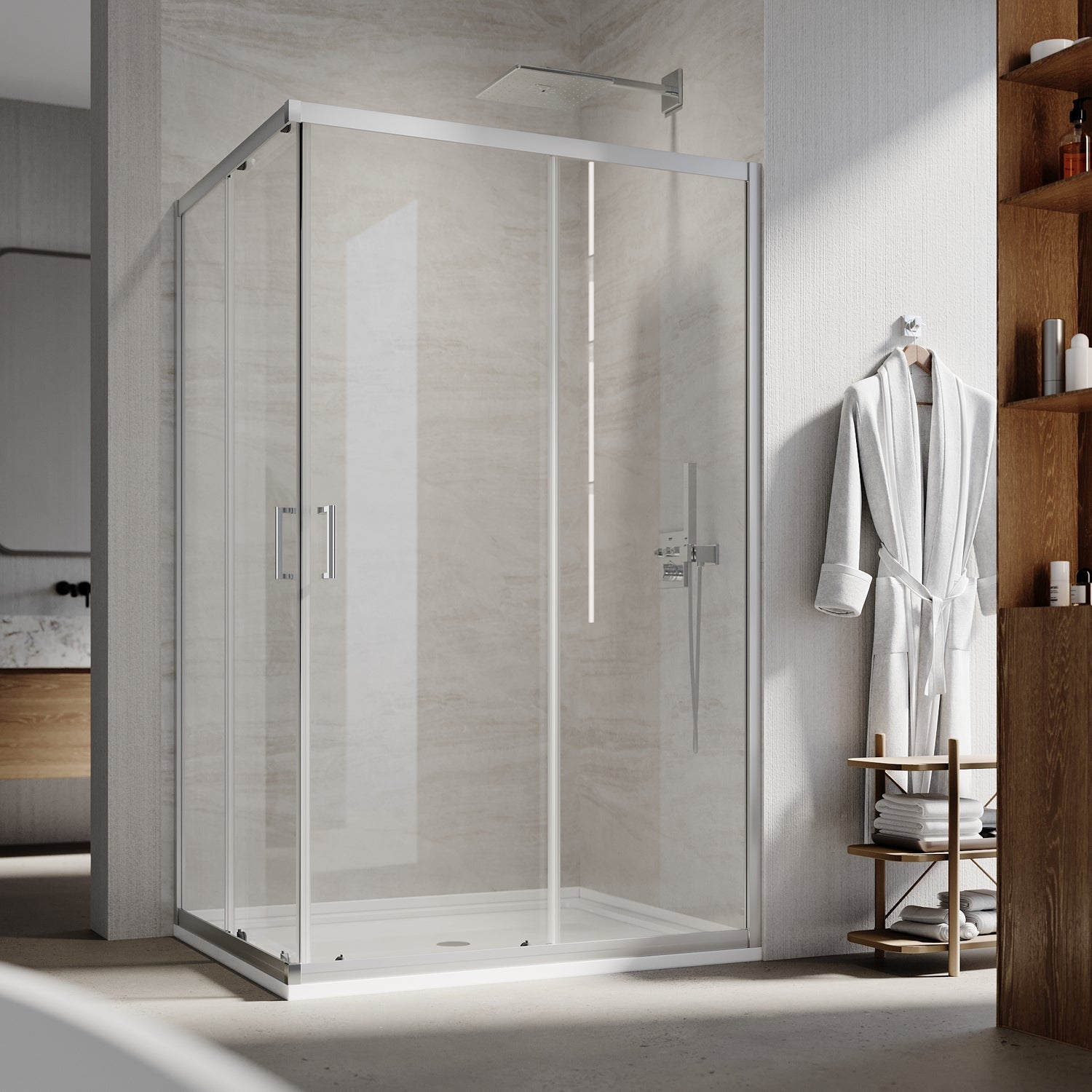

Every bathroom renovation presents a moment of reckoning. Do you prioritise style over practicality, or does the daily grind of cleaning dictate every decision? For Australian homeowners, few choices spark as much debate as the shower screen. On one side, fully framed screens promise durability and water containment. On the other, frameless designs offer minimalist elegance but come with a premium price tag.
Then there is the middle child: semi-frameless screens.
The question dividing busy households across the country is simple yet persistent: are semi-frameless shower screens the ideal middle ground between style and function, or do those slim metal edges simply add another surface to scrub?
This article explores whether semi-frameless screens deliver on their promise or whether the extra wiping makes them more hassle than they are worth.

What Exactly Is a Semi-Frameless Screen?
Before weighing the pros and cons, it is essential to understand what a semi-frameless shower screen actually is.
A semi-frameless screen uses slimline framing around the outer perimeter of the fixed panels while the door itself remains frameless or minimally braced. The result is a clean, contemporary look that sits visually between fully framed and frameless designs.
Visually, you will notice neat aluminium channels along the edges of fixed glass panels, while the door features clean, unframed edges for a more open feel. The glass thickness typically ranges from 6mm to 8mm toughened safety glass, compared to the 10mm glass used in frameless designs. The aluminium frame provides additional structural support, allowing the use of thinner glass without compromising safety or durability.
How It Differs from Other Options
| Feature | Fully Framed | Semi-Frameless | Frameless |
|---|---|---|---|
| Frame Coverage | All edges | Perimeter only (fixed panels) | No frame |
| Glass Thickness | 4–6mm | 6–8mm | 10mm |
| Visual Impact | Traditional, bulkier | Sleek, modern | Minimalist, luxury |
| Structural Support | Maximum | Good | Relies on thick glass |
Semi-frameless screens are available in various configurations, including inline screens, quadrant (diamond) shapes, sliding doors, and swing doors. They must comply with AS/NZS 2208, the Australian safety glazing standard, which mandates that every piece of toughened glass used in a shower screen carry a permanent stamp or label identifying its compliance. The minimum thickness for partly framed toughened glass is 6mm.
In essence, semi-frameless screens strip back the bulky framing of traditional designs while maintaining enough structure to keep costs manageable and installations forgiving.
Why Homeowners Choose Semi-Frameless
Walk into any bathroom showroom in Sydney, Melbourne, or Brisbane, and you will notice a clear trend. Semi-frameless screens are no longer the compromise choice—they have become the default recommendation for a vast cross-section of Australian homeowners. But why? What drives this surge in popularity beyond mere affordability?
The answer lies in a sophisticated blend of financial pragmatism, design psychology, and practical adaptability. Semi-frameless screens have mastered the art of delivering near-luxury aesthetics at a mid-range price point, all while solving real-world problems that frameless screens simply cannot address as effectively.
Let us unpack the seven compelling reasons why semi-frameless is winning the bathroom battle.
Affordability
The most compelling advantage is cost. Semi-frameless screens typically range from $600 to $900 installed, compared to $800 to $1,200+ for frameless options. For budget-conscious renovators, that saving of $200 to $500 is significant—money that can be redirected to other bathroom upgrades.
Aesthetic Appeal
Semi-frameless screens deliver a sleek, modern look that approaches frameless without the premium price tag. They strike the perfect balance between minimalist elegance and structural integrity, enhancing bathrooms ranging from modern to traditional designs.
Structural Support and Durability
The aluminium framing provides extra stability, making semi-frameless screens ideal for busy family bathrooms and rental properties. The extra sealing surfaces help reduce splashes in lively family bathrooms.
Installation Tolerances
Unlike frameless screens that demand perfectly plumb walls, semi-frameless screens are more forgiving. The bottom channel catches most water, and the frame along the walls creates a seal that works even if the walls are slightly uneven.
Water Containment
Partial framing helps keep water inside the enclosure better than some frameless installations, reducing the risk of water damage to your bathroom.
Design Versatility
Semi-frameless screens fit almost any bathroom style—modern, transitional, or classic.
For many Australian households, semi-frameless represents the "sweet spot" —the middle-ground option that delivers the look of frameless without the cost or installation complexity.

Semi-Frameless vs. Frameless – The Head-to-Head Comparison
When homeowners stand in a showroom, the visual difference between a semi-frameless and a fully frameless shower screen is immediately obvious. But the decision runs far deeper than aesthetics. To make an informed choice, you need to understand how these two heavyweights stack up across seven critical dimensions: glass thickness, structural integrity, cost, maintenance, water containment, installation complexity, and hardware longevity.
| Feature | Semi-Frameless | Frameless |
|---|---|---|
| Glass Thickness | 6–8mm toughened glass | 10mm toughened glass |
| Frame | Perimeter frame on fixed panels | No perimeter frame |
| Cost | $600–$900 installed | $800–$1,200+ installed |
| Maintenance | Slightly more cleaning around frame edges | Easiest to clean—no frame to trap grime |
| Aesthetic | Sleek with visible slim framing | Minimalist, seamless glass appearance |
| Water Containment | Generally better at keeping splashes in | Relies on precision fit |
| Installation | More forgiving on uneven walls | Demands precise, square surfaces |
| Durability | Durable with aluminium framing support | Very durable with thick glass |
| Best For | Budget-conscious, busy families, rentals | High-end renovations, design-focused homeowners |

Semi-Frameless vs. Fully Framed – The Upgrade Case
Fully framed shower screens feature aluminium framing on all edges—traditional, robust, and offering maximum water containment. They are the most affordable option, typically ranging from $400 to $700.
The semi-frameless advantage is clear: minimal framing creates a more transparent, modern look while maintaining stability. Semi-frameless screens have fewer components to collect gunk and mildew compared to fully framed designs.
For homeowners wanting a contemporary bathroom without the frameless price tag, semi-frameless is the natural step up from fully framed.
Who Should Upgrade and Who Should Stick?
Upgrade to semi-frameless if:
-
You are renovating your primary residence and care about aesthetics.
-
You want to increase your property's resale appeal.
-
You despise scrubbing grimy frame corners.
-
You value a solid, premium feel when using your shower.
-
Your budget stretches just $200–$300 beyond the cheapest option.
Stick with fully framed if:
-
You are renovating a low-end rental property where cost is the sole driver.
-
The bathroom is in a shed, granny flat, or utility area where appearance is irrelevant.
-
You genuinely do not care about design and just want the cheapest functional enclosure.
-
The bathroom is tiny and you are not fussed about visual openness.
The Australian Context – Climate, Families, and Lifestyles
When Australian homeowners weigh up shower screen options, three factors consistently rise to the top: climate, family dynamics, and lifestyle demands. From the humidity of Queensland to the coastal salt spray of Sydney, each element influences what makes a shower screen genuinely practical for daily life. While semi-frameless offers a compelling middle ground, frameless screens deliver distinct advantages that make them the standout choice for many Aussie households.
Humidity Challenge
In Brisbane, the Gold Coast, and other humid regions, soap scum and mould buildup can become problematic quickly. Frameless screens are easier to maintain in these conditions thanks to frameless edges. Semi-frameless screens require regular cleaning with vinegar or pH-neutral glass cleaners to prevent buildup.
Family Households
For busy families with children, semi-frameless screens are incredibly durable. The framing provides extra structural support that stands up to daily use. The extra sealing surfaces help reduce splashes in lively family bathrooms.
Rental Properties
Semi-frameless screens are a popular choice for investors—affordable, durable, and visually appealing. They offer a modern look without the premium cost of frameless.
Bathroom Size
Semi-frameless sliding screens suit typical alcove enclosures in family bathrooms—practical, accessible, and less costly than frameless.
Lifestyle Factor
For households where bathroom cleaning is a weekly (not daily) ritual, the extra frame-wiping may be a genuine consideration. However, with a simple routine, it is manageable for most.
Who Benefits Most from Frameless Shower Screens?
Taking everything into account, frameless shower screens are the ideal choice for the following Australian households:
-
Families prioritising ultra-low maintenance – those who don't want to spend their weekends scrubbing frame crevices
-
Homes in humid or coastal areas – properties needing protection against frame corrosion and mould issues
-
Small bathrooms or apartments – where maximising spatial openness and light flow is a priority
-
Homeowners planning to sell – those seeking a high-impact, cost-effective upgrade to boost property appeal and valuation
-
Design-driven homeowners – who want their tiles and fixtures to take centre stage without visual interruption
-
Households with primarily adult members – where bathroom usage tends to be more careful and controlled
Of course, frameless screens come with their trade-offs: higher upfront costs, stricter installation precision requirements, and greater dependence on perfectly plumb walls. However, for Australian families who place long-term convenience, visual elegance, and property value at the top of their priority list, these investments translate into tangible quality-of-life improvements that are felt every single day.
Making the Right Choice for Your Home
The question at the heart of this debate—are semi-frameless screens the perfect compromise or just more to wipe?—deserves a balanced answer. And the evidence is clear: semi-frameless screens deliver genuine value. They offer the sleek, contemporary aesthetic of frameless designs at a significantly more accessible price point, with added structural support that suits busy family bathrooms and the practical realities of Australian homes.
Yes, the extra wiping is real. Those slim metal edges and channel junctions demand a little more attention than a fully frameless enclosure. But with a simple daily squeegee habit and a weekly vinegar-water routine, the maintenance burden remains entirely manageable—a minor upkeep hassle, not a genuine dealbreaker for most households.
For the overwhelming majority of Australian families, semi-frameless represents the smart, pragmatic choice. It balances style, budget, and practicality in a way that neither fully framed nor frameless can quite match. You get 90% of the frameless look at 70% of the cost, with superior splash control and installation forgiveness that frameless simply cannot offer.
Ultimately, every shower screen needs wiping. Semi-frameless just asks for a little more attention—and delivers a lot more value in return. If you are ready to explore the possibilities and find the perfect solution for your bathroom, visit Elegant Showers for more semi-frameless shower screen ideas and options for you home.